Is Chicago's Rental Market Still Worth It in 2026?
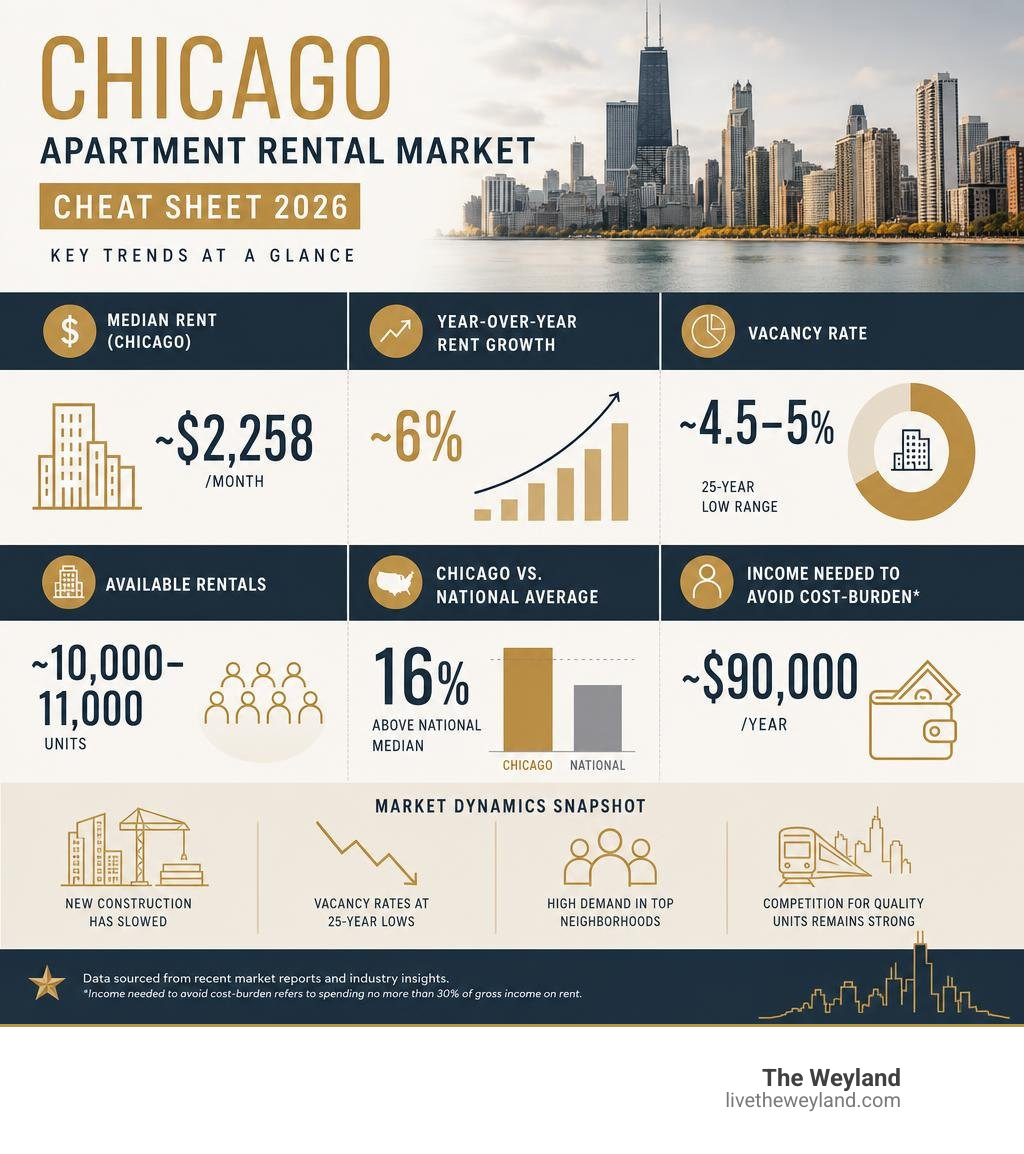
The Chicago apartment rental market is one of the most competitive and fast-moving in the entire country right now. Here's a quick snapshot of where things stand:
| Metric | Current Figure |
|---|---|
| Median rent (Chicago) | ~$2,258/month |
| Year-over-year rent growth | ~6% |
| Vacancy rate | ~4.5–5% |
| Available rentals | ~10,000–11,000 units |
| Chicago vs. national average | 16% above national median |
| Income needed to avoid cost-burden | ~$90,000/year |
Chicago is not a buyer's market for renters right now. Vacancy rates have hit 25-year lows. New construction has slowed to a trickle. And competition for well-located, quality apartments — especially in neighborhoods like Wicker Park and Logan Square — is fierce.
If you're a young professional or couple hunting for a stylish, amenity-rich apartment with easy access to transit and nightlife, you're entering a market that heavily favors landlords. Understanding the data before you search can save you time, money, and a lot of frustration.
I'm Gunnar Blakeway-Walen, Marketing Manager at FLATS®, and through managing marketing for thousands of units across dynamic urban markets, I've developed a front-row view of how the Chicago apartment rental market shifts — and what that means for renters making high-stakes decisions. in the sections below, I'll break down exactly what's driving the market, where prices stand by neighborhood, and what you can realistically expect heading into late 2026 and beyond.
Current State of the Chicago Apartment Rental Market

As we navigate through June 2026, the Chicago apartment rental market continues to showcase remarkable resilience and intensity. While several coastal markets have begun to cool off or stabilize, Chicago is consistently making headlines for its steadfast performance on the national stage.
Historically, Chicago was viewed as a relatively stable, slow-and-steady midwestern market. Those days are officially in the rearview mirror. Today, the city is experiencing a sustained rental resurgence. According to the latest Zillow Chicago Rental Market Trends, rent prices across the city have seen steady upward momentum, widening the gap between local housing costs and the national average.
Our local market has transitioned into a highly competitive environment. When we look at month-over-month and year-over-year trends, the story is one of consistent climbs rather than seasonal dips. While national rent growth has remained relatively flat and modest, Chicago has recorded healthy, positive year-over-year growth that places it near the top of the performance leaderboard among major metropolitan areas. This steady escalation means renters are navigating a landscape where acting quickly is no longer just a recommendation—it is an absolute necessity.
Key Metrics Driving the Chicago Apartment Rental Market
To truly understand how we got here, we have to look at the underlying numbers. The defining feature of the current market is an incredibly tight inventory. Chicago’s apartment occupancy rates have climbed to multi-year highs, leaving vacancy rates hovering at exceptionally low levels. In fact, overall vacancy rates are sitting at some of their lowest points in a quarter of a century.
This lack of empty units has triggered intense competition. According to the Apartments.com May 2026 Rent Growth Report, Chicago’s steady demand continues to outpace national averages, making it one of the tightest major metropolitan areas in the country. Available units are being snapped up rapidly—often within just a few weeks of listing—leaving very little breathing room for prospective residents.
Because of this fast-moving environment, many renters are choosing to stay put. The city's lease renewal rate remains incredibly high, as residents prefer to renew their current leases rather than brave the competitive waters of the open market. This "stay-put" mentality further shrinks the pool of available units, making the search for quality Apartments for Rent in Chicago a high-stakes endeavor.
Supply Constraints and New Construction Trends
Why is the inventory so incredibly low? The answer lies in a combination of high interest rates, elevated material costs, and complex local regulatory hurdles that have collectively created a perfect storm for a construction slowdown.
Over the past few years, Chicago has permitted significantly fewer housing units per capita than other large peer cities. This permitting bottleneck, combined with the broader economic environment, has led to a dramatic inventory drought. According to the Matthews Q1 2026 Chicago Multifamily Market Report, new supply deliveries have plummeted significantly compared to previous years.
With so few new buildings opening their doors, the pressure on existing properties is immense. The new construction that does make it to completion is heavily concentrated in the premium, high-end segment. For renters searching for Modern Apartments Chicago, this means that while beautiful, top-tier options are out there, they are highly coveted and come with a premium.
Neighborhood Breakdown and Property Types
The Chicago rental landscape is far from uniform. Depending on where you look, the pricing, availability, and overall vibe can vary dramatically. To give you a clearer picture of how different areas compare, we have broken down some of the city's key submarkets and neighborhood profiles below.
| Neighborhood / Area | Relative Rental Price Tier | Inventory Availability | Neighborhood Character & Vibe |
|---|---|---|---|
| Wicker Park | Premium | Very Tight | Trendy, artistic, highly walkable, transit-oriented |
| Logan Square | High / Premium | Tight | Creative hub, historic parkways, incredible dining |
| Near West Side | Very High | Moderately Tight | Bustling, modern high-rises, close to downtown |
| Rogers Park | Moderate / Accessible | Moderate | Lakefront charm, diverse, laid-back community |
| Lincoln Square | Moderate / Mid-Range | Tight | Historic, family-friendly, community-focused |
As you can see, location plays a massive role in what you will experience during your search. According to the Zumper Chicago Rent Research, these neighborhood-specific dynamics dictate everything from how quickly you need to submit an application to what kind of space you can expect.
While more distant neighborhoods on the far north or south sides of the city offer a bit more breathing room, the high-demand neighborhoods closer to the city center and major transit lines remain highly competitive. Additionally, the type of property you choose will influence your experience: single-family rental homes and larger multi-bedroom apartments are incredibly scarce, while studios and one-bedroom apartments represent the bulk of the active, fast-moving inventory.
High-Demand Neighborhoods: Wicker Park and Logan Square
If you are looking for the absolute sweet spot of culture, transit accessibility, and neighborhood energy, Wicker Park and Logan Square are consistently at the top of the list. These neighborhoods are not just places to live; they are lifestyle destinations.
Wicker Park is famous for its historic charm, vibrant arts scene, and endless boutiques, coffee shops, and Michelin-rated dining options. If you want to dive deeper into what makes this neighborhood so special, check out our comprehensive Wicker Park Chicago Apartments Guide. It is a neighborhood where historic Victorian architecture meets modern, boutique luxury.
Just to the northwest, Logan Square offers a slightly different but equally magnetic energy. Known for its wide, tree-lined historic boulevards, thriving farmers market, and creative community, it continues to draw renters who want a neighborhood with a distinct soul. You can explore the local rental landscape further in our Logan Square Chicago Apartments Guide or browse active listings directly via Apartments for Rent in Logan Square. Both neighborhoods are highly sought after, meaning listings here move faster than almost anywhere else in the city.
Luxury and Premium Segments in the Chicago Apartment Rental Market
For renters who prioritize top-tier finishes, convenience, and upscale living, the luxury and premium segments of the market offer incredible options. The modern renter is looking for more than just four walls—they want a curated living experience.
In the premium market, the focus has shifted toward boutique luxury developments that offer a more intimate, exclusive feel compared to massive downtown high-rises. These buildings prioritize high-end design, thoughtful layouts, and spaces that seamlessly accommodate remote work and relaxation. Our Chicago Luxury Apartments Guide highlights how these premium spaces are redefining urban living.
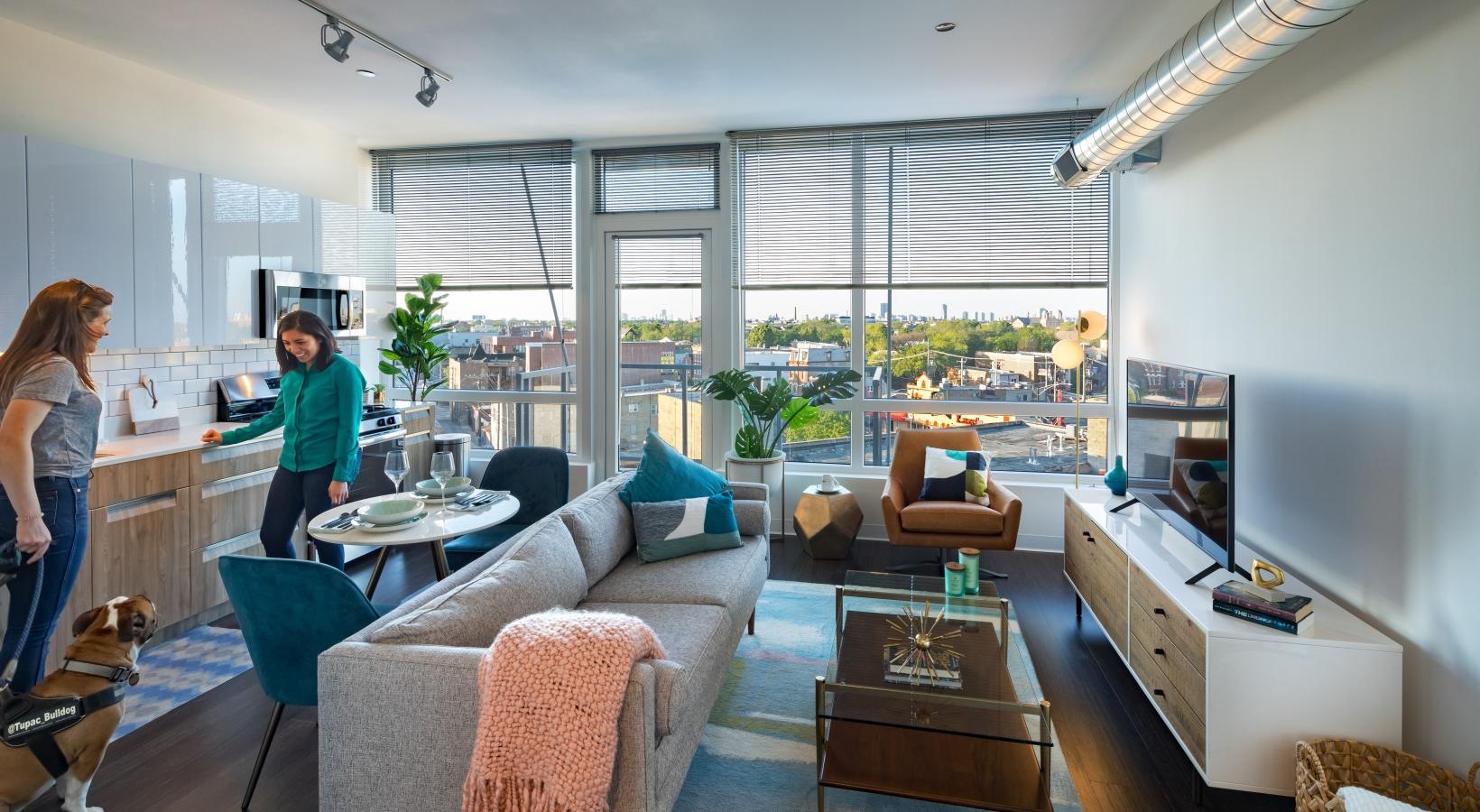
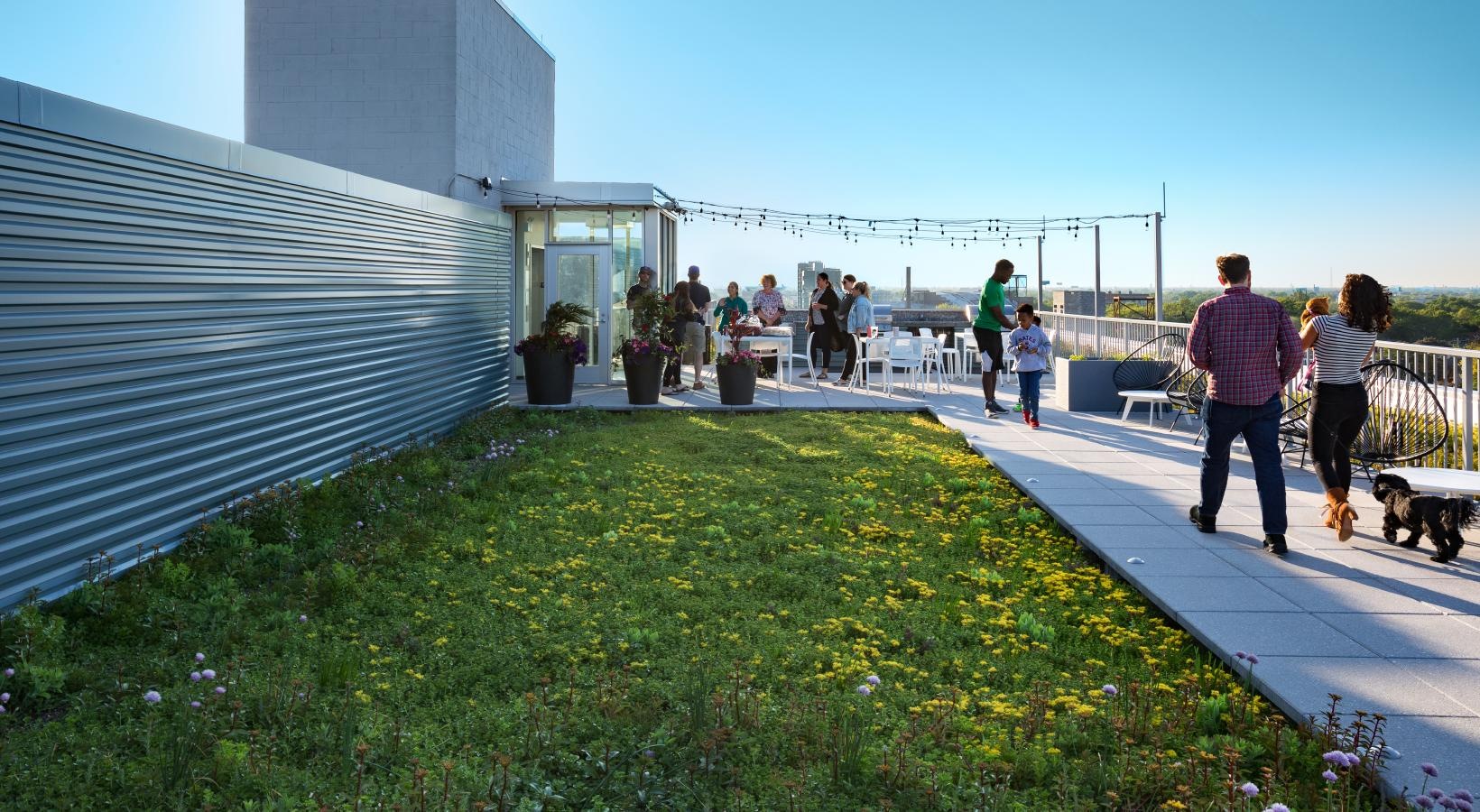
If you are focusing your search on the West Side, exploring Luxury Apartments in Wicker Park will reveal properties that blend upscale features with the neighborhood's artistic character. Think custom cabinetry, floor-to-ceiling windows, and rooftop terraces with stunning skyline views, all set within a boutique footprint that feels like home.
Market Drivers: Why Chicago Rents Are Rising
It is easy to look at rising rent prices and feel frustrated, but understanding why this is happening can help you make smarter decisions. Several powerful economic forces are driving the current state of the Chicago apartment rental market.
First and foremost is the impact of Cook County property tax reassessments. In recent years, commercial and multifamily property valuations have surged, leading to significantly higher property tax bills for building owners. Because operating costs have risen so sharply, landlords are passing these expenses along to renters in the form of higher base rents and utility fees.
Second, Chicago's economic resilience is attracting a steady stream of new residents. The city boasts a highly diversified economy anchored by finance, healthcare, logistics, and professional services. As major companies expand their footprints here, a highly educated workforce is moving to the city. Many of these incoming professionals are choosing to rent rather than buy, keeping demand for premium housing incredibly high.
Furthermore, as noted in reports on REBusinessOnline Chicago Market Performance, Chicago offers a massive affordability advantage compared to coastal giants like New York, San Francisco, or Los Angeles. Remote workers and transplant professionals are realizing they can get a much higher quality of life and more luxurious living spaces in Chicago for a fraction of what they would pay on the coasts.
Finally, we cannot talk about Chicago living without talking about public transit. Proximity to the CTA is one of the single biggest drivers of rental demand. Apartments located near rapid transit lines—especially the Blue Line, which connects the loop directly to Wicker Park, Logan Square, and O'Hare International Airport—command a serious premium. Renters are willing to pay more for the convenience of a car-free commute, which is why searching for Apartments Near Blue Line remains a top priority for city dwellers.
Renter's Guide: Affordability and Landlord Strategies in 2026
Navigating the market in late 2026 requires a shift in strategy. The days of casual apartment hunting and negotiating deep discounts are temporarily on hold. To secure an apartment you love without becoming house-poor, you need to understand how landlords are operating today.
Let's start with affordability. The golden rule of renting is the 30% income guide, which suggests that your gross monthly income should be at least three times your monthly rent. In a tight market like Chicago's, where a significant portion of households are technically "cost-burdened" (paying more than 30% of their income on housing), sticking to a realistic budget is crucial. To comfortably afford a premium apartment in a desirable neighborhood, having a solid financial plan and understanding your must-haves versus nice-to-haves is essential.
One of the most notable shifts in 2026 is the near-total disappearance of spring concessions and renter incentives. In previous years, landlords frequently offered "one month free" or waived move-in fees to attract tenants during the busy leasing season. Today, because vacancy rates are so low and demand is so high, landlords simply do not need to offer these perks. We have entered a "no-incentive" environment where apartments are leasing at full asking price, often with multiple applications submitted within hours of a unit going live.
To stand out and secure your dream space, you need to be prepared. Have your proof of income, credit reports, and landlord references ready to go before you tour. If you are looking for a detailed breakdown of what to expect in the premium market, our Wicker Park One Bedroom Guide offers excellent insights into layout options and finishes. Additionally, pay close attention to building features; prioritizing properties with Chicago Upscale Apartment Amenities—such as secure bike storage, fitness centers, and rooftop community spaces—will ensure you get the maximum value out of your monthly housing investment.
Frequently Asked Questions about the Chicago Rental Market
What is the average rent in Chicago compared to the national average?
Rent in Chicago is significantly higher than the national average, with local renters paying a premium of approximately 16% over the national median. This gap has widened over the past year due to Chicago's exceptionally low vacancy rates and sustained demand, making it one of the more expensive—but still relatively accessible—major cities in the United States.
What salary is needed to afford an apartment in Chicago?
To comfortably afford an average apartment in Chicago without being cost-burdened, renters typically need an annual income in the high five-figure range (approximately $90,000 per year), assuming they follow the standard 30% housing budget rule. For premium or luxury apartments in high-demand neighborhoods like Wicker Park, a higher household income is recommended to cover rent and local lifestyle expenses comfortably.
Are landlords offering rent concessions or incentives in 2026?
Generally, no. Due to an inventory drought and incredibly low vacancy rates, traditional concessions like "free months of rent" or waived fees have largely disappeared in 2026. Landlords currently hold significant pricing power, meaning units are renting quickly at full asking price without the need for promotional incentives.
Conclusion and 2026-2027 Outlook
As we look toward the remainder of 2026 and head into 2027, the Chicago apartment rental market is expected to remain highly competitive. While the rate of rent growth may stabilize slightly, the fundamental imbalance between high demand and limited new supply means that it will remain a landlord's market for the foreseeable future.
For renters, this means that finding a home that offers the perfect balance of location, style, and convenience requires a proactive approach. Working with boutique, high-quality properties that prioritize the resident experience is the best way to ensure you find a place you truly love calling home.
At The Weyland, we understand what modern Chicago renters are looking for. We offer luxury studio, one, and two-bedroom apartments in the heart of Wicker Park. Designed with upscale features, boutique amenities, and situated just steps from the Western Blue Line CTA station, our properties offer unbeatable access to the very best of Chicago living.
Ready to find your next home before the next seasonal rush? Explore our available Apartments in Wicker Park and let us help you experience Chicago living at its finest.