The Logan Square Chicago Zip Code: Quick Answer
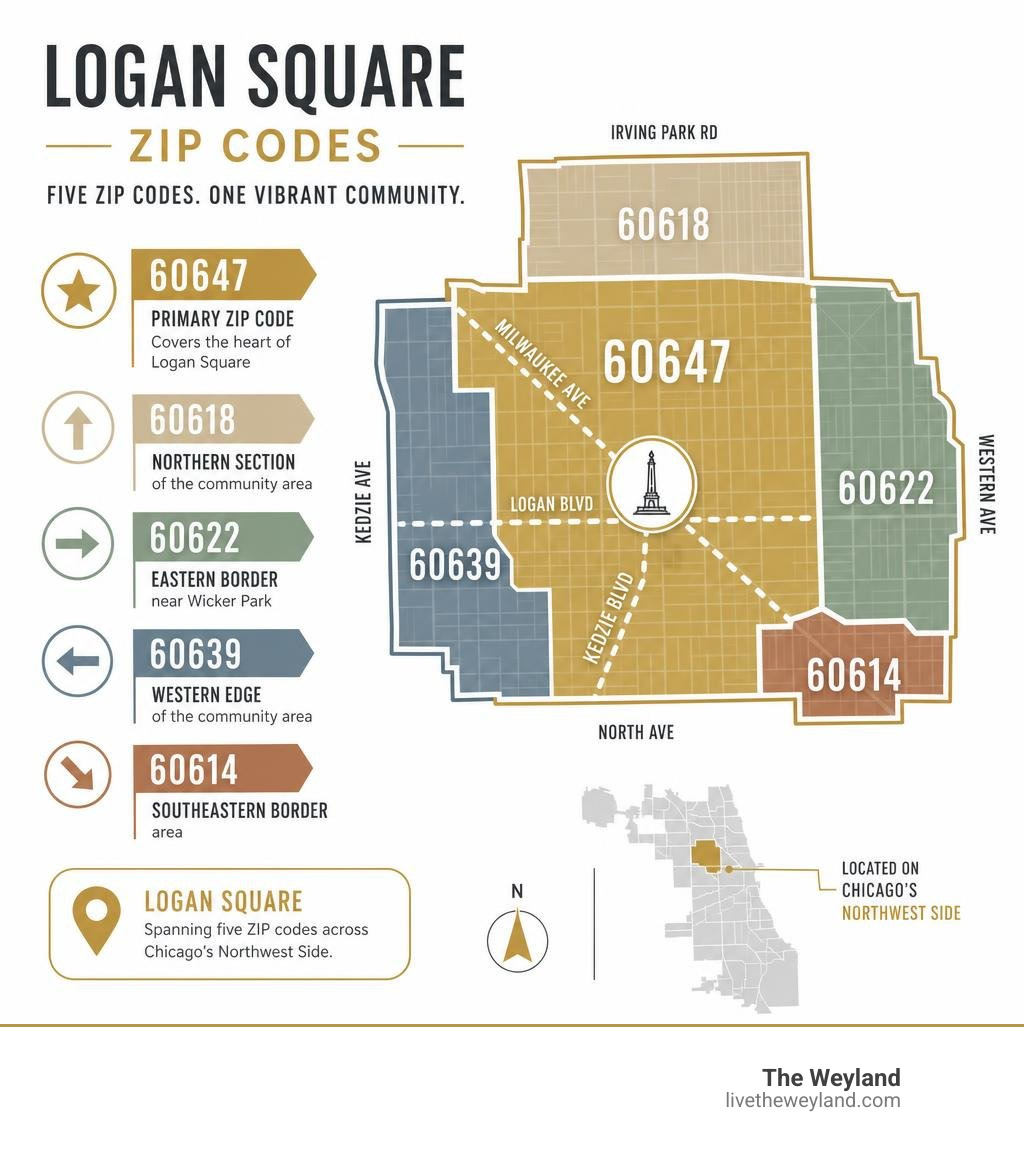
The logan square chicago zip code you need depends on which part of the neighborhood you're in. Logan Square spans five ZIP codes in total:
| ZIP Code | Area Covered |
|---|---|
| 60647 | Primary ZIP code — covers the heart of Logan Square |
| 60618 | Northern section of the community area |
| 60622 | Eastern border near Wicker Park |
| 60639 | Western edge of the community area |
| 60614 | Small southeastern border area |
Most Logan Square addresses fall under 60647.
Logan Square is one of Chicago's 77 official community areas, sitting on the northwest side of the city. It covers 3.23 square miles and is home to nearly 71,000 residents. Whether you're sending mail, searching for an apartment, or scoping out a new neighborhood, knowing the right ZIP code matters.
The neighborhood centers on a public square where Milwaukee Avenue, Logan Boulevard, and Kedzie Boulevard converge — anchored by the iconic Illinois Centennial Monument. It's a dense, walkable area with a median age of just 33.1, making it one of Chicago's most energetic and sought-after places to live.
My name is Gunnar Blakeway-Walen, and as Marketing Manager at FLATS® with deep experience analyzing urban neighborhoods and multifamily housing markets, I've worked extensively with location data — including the logan square chicago zip code landscape — to help renters find the right fit. In this guide, I'll walk you through everything you need to know about Logan Square's postal boundaries, history, demographics, and real estate trends.
Understanding the Logan Square Chicago Zip Code Boundaries
To truly understand how mail moves through this iconic pocket of Chicago, we have to look closely at how the United States Postal Service (USPS) draws its lines. While many Chicagoans think of Logan Square as a single, unified neighborhood, the official community area actually intersects with five distinct ZIP codes: 60647, 60618, 60622, 60639, and 60614.
These boundaries don't always align perfectly with the streets we walk every day. Instead, they overlap with neighboring communities like Wicker Park, Avondale, and Hermosa. To help you visualize how these postal zones divide the area, we can look at how they distribute across the local geography.
For a comprehensive breakdown of the geographic coordinates and regional postal details, you can consult the Postal Codes of Logan Square, Illinois, United States directory.
| ZIP Code | Primary Neighborhood Association | General Boundaries within Logan Square | Character & Vibe |
|---|---|---|---|
| 60647 | Logan Square / Bucktown / Humboldt Park | Central, Southern, and Eastern Logan Square | Historic boulevards, trendy dining, creative hub |
| 60618 | Avondale / Irving Park / North Logan | Northern edge, north of Diversey Parkway | Quieter residential streets, family-friendly |
| 60622 | Wicker Park / West Town | Southeastern corner near Bloomingdale Ave | Highly walkable, bustling retail, historic flats |
| 60639 | Hermosa / Belmont Cragin | Western boundary, west of Pulaski Rd | Industrial roots, diverse residential pockets |
| 60614 | Lincoln Park | Tiny sliver on the absolute eastern edge | High-end residential, close to the river |
As we can see, while 60647 does the heavy lifting, the community area is a tapestry of postal zones. This overlapping structure is typical of Chicago’s historic northwest side, where old township borders and industrial rail lines shaped the modern grid.
Which Logan Square Chicago Zip Code Do You Need?
If you are looking for the absolute heart of the neighborhood, 60647 is your primary ZIP code. This zone covers the vast majority of local businesses, the historic boulevard system, and the famous Logan Square Blue Line subway station. If you are planning to move here, rent an apartment, or set up utility services, there is a very high probability that 60647 is the number you will write on your application.
However, if your search takes you toward the northern section of the community area, you will likely cross over into 60618. This zone runs north of Diversey Parkway and transitions into Avondale. It is an incredibly popular area for those who want a slightly quieter, more residential feel while remaining within walking distance of Logan Square's main commercial strips.
On the other hand, if you are looking along the eastern border near the Chicago River or the Kennedy Expressway, you might find yourself touching 60614 or 60622. These zones connect Logan Square to the highly active areas of Bucktown and Wicker Park. If you want to learn more about how these borders blend together, check out our guide on Logan Square Chicago Illinois to see how the neighborhood transitions seamlessly into neighboring hotspots.
How to Format a Logan Square Chicago Zip Code for Mail
Whether you are shipping a package to a friend or updating your billing address, formatting your mail correctly ensures it doesn't get lost in the USPS system. Chicago is famous for its grid system, which means directional prefixes (North, South, West, East) are absolutely critical.
When writing an address for this area, follow these standard USPS guidelines:
- Recipient Name: Write the full name clearly on the first line.
- Street Address: Include the directional prefix and any apartment or unit numbers (e.g., 2500 N Milwaukee Ave Apt 3B).
- City, State, and ZIP Code: Write "Chicago, IL" followed by the specific 5-digit ZIP code. For maximum efficiency, you can use the ZIP+4 format (e.g., 60647-XXXX), which points mail carriers to a specific block or building.
Always write the state abbreviation as "IL" and ensure the ZIP code is placed on the same line as the city and state. Using these standards keeps our local mail carriers happy and ensures your deliveries arrive right on time.
History, Neighborhoods, and Key Landmarks
To understand why this part of Chicago is so highly valued today, we have to look back at how it came to be. Long before it was filled with craft cocktail lounges and Michelin-starred restaurants, the area was a collection of open prairie and quiet settlements.
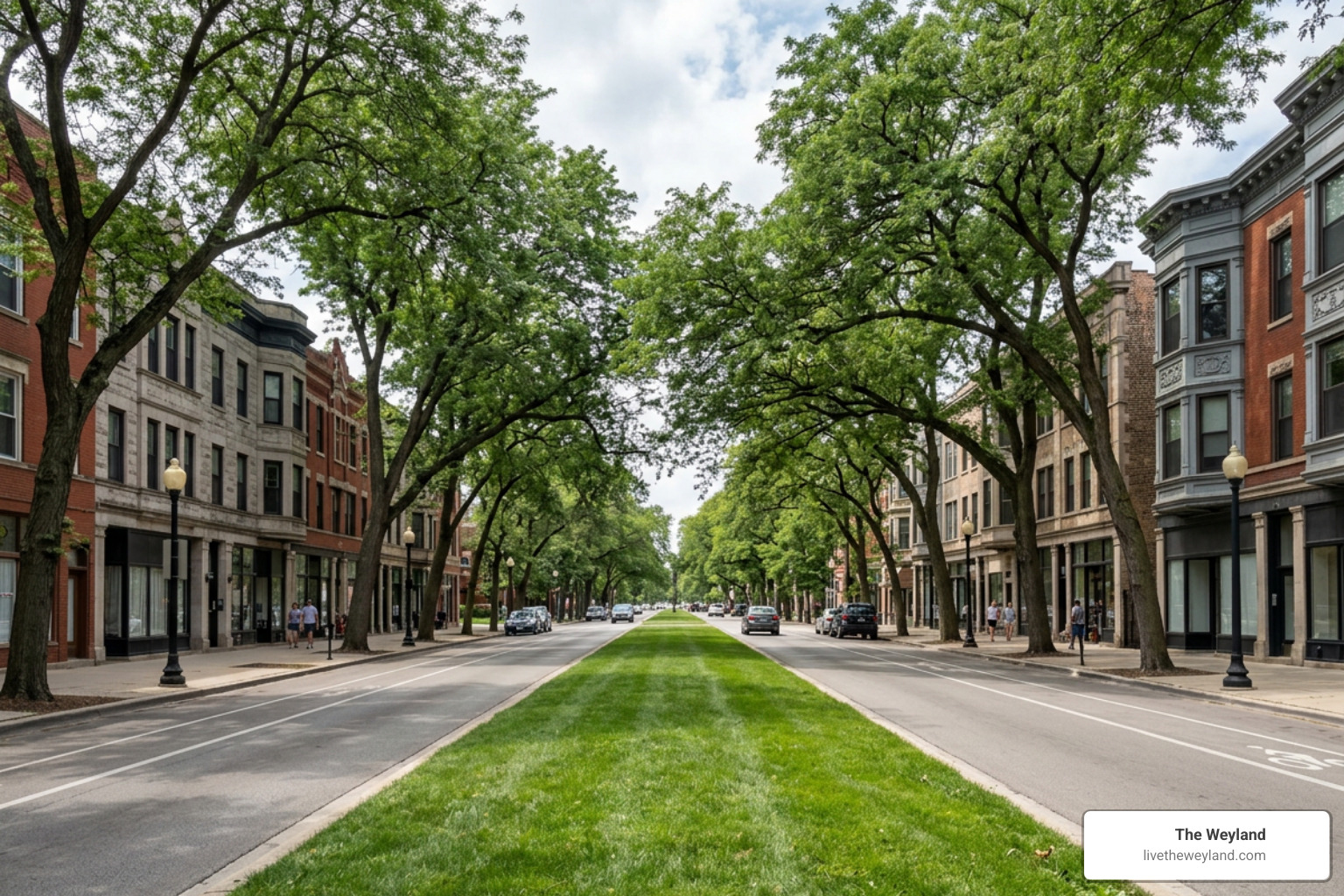
The neighborhood's modern layout began to take shape in the 19th century. Originally, the land was developed around small, independent towns like Jefferson, Maplewood, and Avondale. Milwaukee Avenue itself began as a Native American trail before evolving into a major commercial plank road. Following the Great Chicago Fire of 1871, residents fled the city center in search of safer, brick-built housing, leading to a massive construction boom in the area.
The community was officially annexed into the City of Chicago in 1889. The neighborhood was named in honor of General John A. Logan, a distinguished Civil War general and prominent Illinois political leader. For a deeper dive into the historical archives and the evolution of the local infrastructure, you can read the comprehensive Logan Square, Chicago Wikipedia entry.
Origin of the Name and the Centennial Monument
At the physical and cultural center of the neighborhood lies the public square that shares its name. This open green space is anchored by the breathtaking Illinois Centennial Monument, which was erected in 1918 to commemorate the 100th anniversary of Illinois' statehood.
Designed by Henry Bacon—the famed architect who also designed the Lincoln Memorial in Washington, D.C.—the monument is a towering, 70-foot single Doric column made of Tennessee marble. At its top sits a carved eagle, while the base features stunning bas-relief figures sculpted by Evelyn Beatrice Longman. These figures represent the native people, early pioneers, and industrial workers who built Illinois. Today, the monument serves as a central gathering place for community rallies, farmers' markets, and weekend picnics.
Sub-Neighborhoods Within the Community Area
While the city designates "Logan Square" as one of its 77 official community areas, locals know that this area is actually made up of several smaller, distinct sub-neighborhoods. Each of these pockets has its own unique architectural style, history, and community vibe:
- Bucktown: Known for its artistic roots, historic brick cottages, and high-energy shopping districts. While parts of Bucktown sit in Wicker Park, the northwestern portion extends directly into the Logan Square community area.
- Palmer Square: A beautiful, historic pocket centered around a scenic, 7-acre parkway. In the 1880s, Palmer Square was a popular track for "wheelmen" (early cyclists) who loved racing along its paved paths. Today, it is lined with historic graystones and quiet, tree-lined streets.
- Belmont Gardens: Located on the northwest edge of the community area, this sub-neighborhood offers a quieter, bungalow-heavy residential experience that is perfect for those seeking a relaxed pace.
- Kosciuszko Park: Often referred to by locals as "Koz Park," this area is centered around a historic fieldhouse and park. It has historically been a major hub for Chicago's Polish-American community and remains a vibrant, family-friendly residential zone.
If you are trying to decide which of these pockets matches your personal style, our detailed breakdown on Living in Logan Square offers an insider's look at daily life, walkability, and transit options across these unique sub-neighborhoods.
Demographics, Education, and Real Estate Trends
Logan Square is a dynamic community area that has experienced significant demographic and economic shifts over the last few decades. Understanding these numbers is essential for anyone looking to invest, rent, or buy in the area.

According to the latest data snapshots, the total population of Logan Square stands at approximately 70,869 residents. With a land area of 3.23 square miles, this creates a high population density of roughly 21,900 people per square mile. This density contributes directly to the neighborhood's bustling, highly active street life.
To explore the raw data, household characteristics, and detailed planning metrics for the area, you can review the official CMAP Community Data Snapshot | Logan Square report.
Median Income and Educational Attainment
The economic profile of Logan Square has risen sharply in recent years, reflecting the neighborhood's growing popularity among young professionals and families.
- Median Household Income: The median household income in the community area is $103,469, which is significantly higher than the citywide Chicago average of $75,134.
- Educational Attainment: The area boasts an exceptionally high level of education. Approximately 92.6% of residents hold a high school diploma or higher, while 61.7% of the population has earned a bachelor's degree or higher.
- Age Distribution: The neighborhood skew is notably young, with a median age of 33.1 years. This creates an active market for local restaurants, independent bookstores, and creative businesses.
- Racial & Ethnic Demographics: The community is diverse, with a demographic makeup of approximately 51.5% White (Non-Hispanic), 34.5% Hispanic or Latino, 5.3% Black, 4.9% Asian, and 3.8% identifying with other backgrounds.
This combination of a highly educated, young, and economically active population has fueled incredible growth along commercial corridors like Milwaukee, Armitage, and Diversey Avenues.
Real Estate Market and Housing Costs
The real estate market in Logan Square is highly competitive, characterized by low inventory, rapid sales, and strong appreciation rates.
According to market intelligence reports, the median home price in Logan Square has climbed to approximately $540,000, with a typical price per square foot ranging between $350 and $420. Condos and two-bedroom properties generally range from $350,000 to $500,000, while historic single-family homes and newly constructed properties regularly command $600,000 to well over $1.2 million.
This is a market heavily dominated by renters. Approximately 62.3% of the occupied housing units in Logan Square are renter-occupied. The neighborhood's historic housing stock is incredibly unique, with 60.2% of all residential units built before 1940. This means renters and buyers alike can enjoy beautiful historic details, such as exposed brick, crown molding, and original hardwood floors, alongside modern updates.
For a deeper analysis of market trends, pricing strategies, and comparable neighborhoods, you can check out the Logan Square Neighborhood Analysis | Chicago, IL Real Estate Market Intelligence 2025 report.
If you are currently hunting for a place to live and want to find the best rental options in the area, be sure to browse our curated list of Logan Square Apartment Deals to find high-end spaces that fit your lifestyle.
Frequently Asked Questions About Logan Square ZIP Codes
Navigating the postal system in a large city like Chicago can be confusing. To help you get your bearings, we have compiled answers to some of the most common questions about the logan square chicago zip code boundaries and local geography.
What is the primary ZIP code for Logan Square?
The primary ZIP code for Logan Square is 60647. This ZIP code covers the central core of the neighborhood, including the historic boulevards, the Logan Square Blue Line station, and the main commercial strips along Milwaukee Avenue. While other ZIP codes cover the outer edges of the community area, 60647 is the postal code most closely associated with the neighborhood's identity.
What are the official boundaries of Logan Square?
The official boundaries of the Logan Square community area are defined by the City of Chicago as follows:
- Northern Boundary: Diversey Parkway
- Eastern Boundary: The Chicago River (and the Kennedy Expressway/I-90/94)
- Southern Boundary: Bloomingdale Avenue (home to the famous Bloomingdale Trail, also known as The 606)
- Western Boundary: Hamlin Avenue (extending to Kenton Avenue along certain rail lines)
These boundaries encompass a diverse array of historic streets, parks, and residential blocks.
How has gentrification changed Logan Square's demographics?
Over the past two decades, Logan Square has experienced a profound demographic and economic shift. Historically a working-class neighborhood with a large Hispanic and Latino majority, the area has seen rapid redevelopment, rising property values, and a influx of higher-income residents.
While this economic growth has brought beautifully restored historic properties, new parks, and a world-class dining scene, it has also led to a population decline of roughly 14.3% between 2000 and the mid-2020s. This decline is largely due to the conversion of multi-unit buildings (like historic two-flats) into single-family homes, alongside rising housing costs that have displaced some long-term residents. Today, community groups and developers continue to navigate the balance between economic investment and preserving the neighborhood's diverse cultural heritage.
Conclusion
Finding the right logan square chicago zip code is just the first step in exploring one of Chicago's most historic, creative, and energetic neighborhoods. From the towering heights of the Illinois Centennial Monument to the quiet, leafy paths of Palmer Square, this community offers an incredible mix of historic charm and modern urban living.
If you are looking to experience the absolute best of the northwest side, we invite you to explore what we have built nearby. At The Weyland, we offer luxury studio, one, and two-bedroom apartments located in neighboring Wicker Park. Designed for those who appreciate upscale features, boutique amenities, and a connected urban lifestyle, our community sits just steps from the Western Blue Line CTA station. This prime location gives you unbeatable, rapid transit access to the heart of Logan Square, downtown Chicago, and beyond.
Ready to find your perfect Chicago home? Check out our comprehensive Logan Square Chicago Apartments Guide to explore the best rental options, neighborhood highlights, and insider tips for your next move.