What Is Logan Square Chicago Illinois?
Logan Square Chicago Illinois is one of the city's most vibrant northwest-side neighborhoods — a community area blending historic architecture, diverse culture, and a thriving food and nightlife scene.
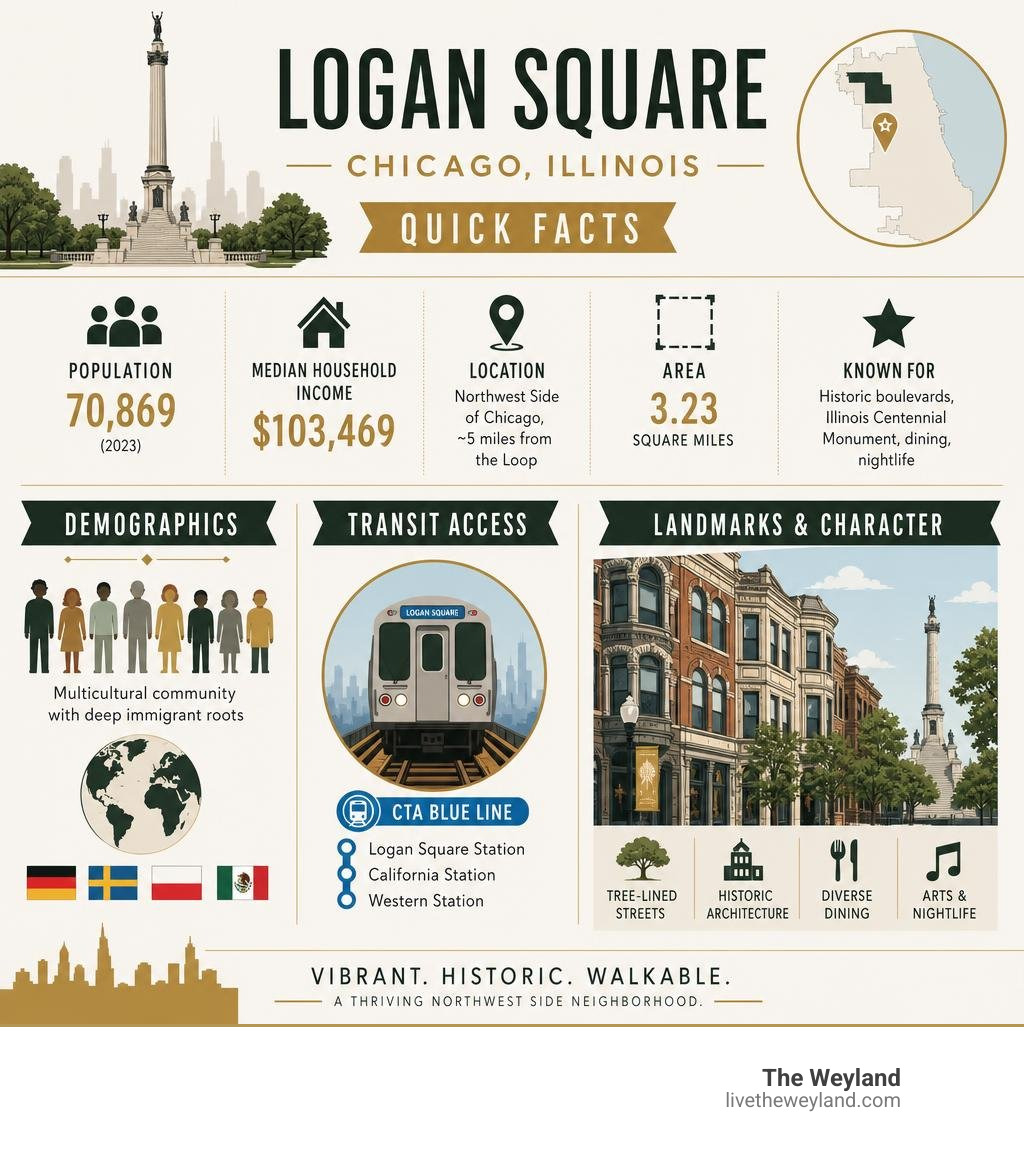
Here's a quick overview:
| Feature | Details |
|---|---|
| Location | Northwest Side of Chicago, ~5 miles from the Loop |
| Area | 3.23 square miles |
| Population | 70,869 (2023) |
| Median Household Income | $103,469 |
| Known For | Historic boulevards, Illinois Centennial Monument, dining, nightlife |
| Transit Access | CTA Blue Line (Logan Square, California, Western stations) |
| Vibe | Multicultural, artsy, walkable, increasingly upscale |
Logan Square sits at the northwest terminus of Chicago's famous Boulevard System. It's home to tree-lined streets, historic greystones, and a buzzing mix of locally owned restaurants, cocktail bars, and music venues. It was voted the best north side neighborhood in 2020 — and it's easy to see why.
The neighborhood has deep immigrant roots, shaped over generations by German, Scandinavian, Polish, and Latino communities. Today, it attracts young professionals drawn to its unique blend of history, culture, and modern city living.
I'm Gunnar Blakeway-Walen, Marketing Manager at FLATS®, and my work positioning urban apartment communities across Chicago has given me a front-row seat to what makes Logan Square Chicago Illinois one of the most sought-after places to live on the northwest side. In the sections ahead, I'll walk you through everything you need to know — from its storied past to its best spots to eat, drink, and explore.
History and Landmarks of Logan Square
Long before it became the cultural hotspot we know today, the land that is now Logan Square was open prairie. In 1836, a trailblazer named Martin Kimball purchased 160 acres of this land, establishing a farm and sowing the seeds for future settlement. The area was originally known as "Jefferson" and developed around early towns like Jefferson, Maplewood, and Avondale.
The neighborhood's early growth was heavily influenced by its transit corridors. Milwaukee Avenue, which serves as a major commercial artery today, originated as a Native American trail before 1830. By 1849, it was constructed with wooden boards and known as the Northwest Plank Road, a 14-foot-wide, 27-mile-long toll road that connected the rural outskirts to the heart of Chicago.
Following the Great Chicago Fire of 1871, the area saw a massive development boom. Because this territory lay outside Chicago’s strict post-fire building safety limits, developers and families could build affordable frame homes quickly. This rapid expansion eventually led to the official annexation of the area into the city of Chicago in 1889.
If you want to dive deeper into the visual evolution of these streets, the History of Logan Square offers an incredible chronological timeline of the neighborhood's growth.
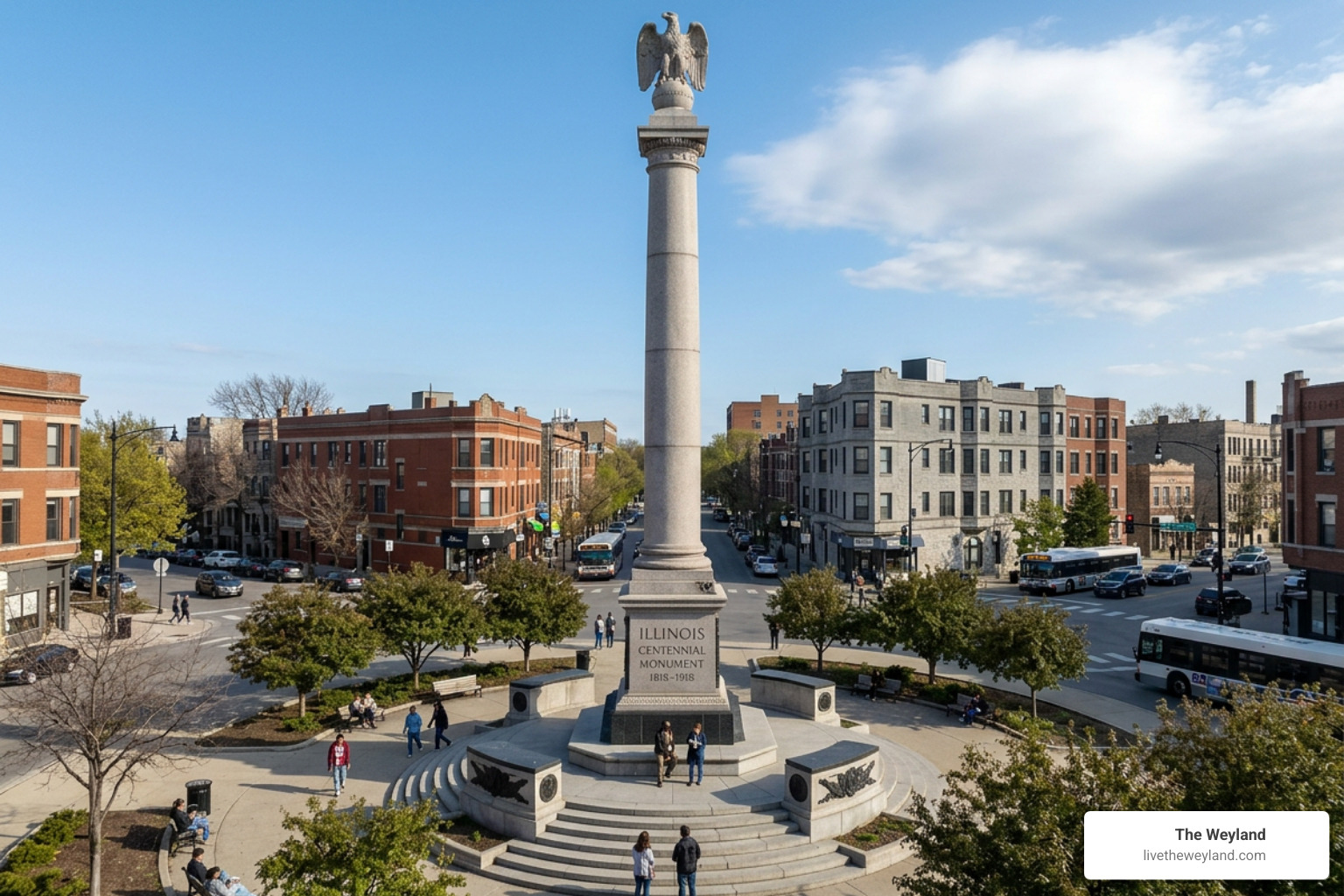
One cannot talk about this neighborhood without mentioning its crown jewel: the Illinois Centennial Monument. Built in 1918 to commemorate the 100th anniversary of Illinois' statehood, this striking 70-foot-tall marble Doric column stands proudly in the center of the public square. It was designed by Henry Bacon, the famed architect who also designed the Lincoln Memorial in Washington, D.C., and features exquisite carvings sculpted by Evelyn Beatrice Longman. The monument is topped by a single marble eagle, referencing the Illinois state flag.
Just a short walk down Milwaukee Avenue is another historic landmark: the Logan Theatre. Opened in 1915 as a single-screen cinema, it has evolved into a beloved multi-screen theater that preserves its vintage charm while hosting the longest-running underground film festival in the world.
The Chicago Boulevard System
One of the most defining physical characteristics of logan square chicago illinois is its connection to the historic Chicago Boulevard System. This 26-mile network of wide, landscaped avenues and public parks was designed to create a "green ring" around the city.
Pioneering landscape architects William Le Baron Jenney and Jens Jensen played massive roles in designing and refining the boulevards that cut through the neighborhood. Today, the Logan Square Boulevards District encompasses 2.5 miles of this system, specifically highlighting Logan Boulevard, Kedzie Boulevard, and Palmer Square.
Walking down these boulevards, you are treated to a parade of stunning late 19th-century architecture, including massive stone mansions, classic Chicago brick bungalows, and stately greystones. Palmer Square, a 7.68-acre park within this system, was famously popular in the 1880s as a track for bicycle-riding "wheelmen" or "scorchers" during the height of the national bicycle craze.
Neighborhoods Within the Logan Square Community Area
While the public square itself is the central hub, the official Chicago Community Area 22 (Logan Square) is actually a collection of several distinct, historic sub-neighborhoods. Each pocket has its own unique flavor, architectural character, and community vibe:
- Bucktown: Located on the eastern edge of the community area, Bucktown is one of Chicago’s most famous creative enclaves. Originally settled by Polish immigrants in the 19th century, it was colloquially called Kozie Prery (Goat Prairie) because of the large number of goats raised by residents. Today, it is a trendy hotspot filled with boutique shopping, art galleries, and upscale dining. You can explore more about this pocket via the Wicker Park / Bucktown - Chicago Neighborhoods guide.
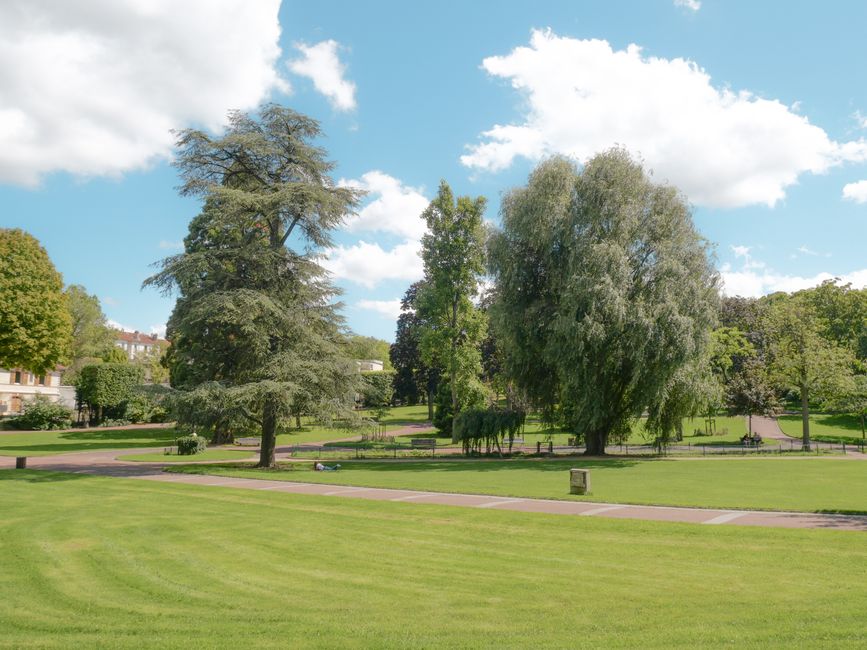
- Palmer Square: Centered around the 7.68-acre historic parkway of the same name, Palmer Square is a quieter, highly residential pocket. It is characterized by its gorgeous historic homes and towering canopy of trees, making it a favorite spot for dog-walkers, runners, and families.
- Belmont Gardens: Tucked into the northwest corner of the community area, Belmont Gardens blends residential bungalows with industrial history. It is a peaceful, community-oriented pocket that offers a slightly more relaxed pace compared to the bustling commercial corridors of Milwaukee Avenue.
- Kosciuszko Park: Locally known as "Kozzy Park," this neighborhood is centered around a historic park featuring a beautiful Tudor Revival fieldhouse. It has historically served as a major hub for Chicago's Polish community and remains a vibrant, family-friendly residential area.
Demographics and Gentrification in Logan Square Chicago Illinois
To understand modern logan square chicago illinois, it is helpful to look at how its demographic makeup has evolved over the decades. The neighborhood has historically been a gateway for immigrant communities, shifting from German and Scandinavian settlers in the late 19th century to a massive influx of Polish and Jewish families in the early-to-mid 20th century. By the 1990s, Logan Square had become a predominantly Latino neighborhood, with over two-thirds of the population identifying as Hispanic.
In recent decades, intense gentrification has reshaped the neighborhood's socioeconomic landscape. While the population has slightly declined from its historical peaks, household incomes and education levels have risen dramatically.
| Demographic Metric | Current Value (Based on Recent Data) |
|---|---|
| Total Population | 70,869 |
| Population Density | 21,900 people per square mile |
| Racial/Ethnic Composition | 51.5% White, 34.5% Hispanic, 5.3% Black, 4.9% Asian, 3.8% Other |
| Educational Attainment | 92.6% High School Diploma+; 61.7% Bachelor's Degree+ |
| Median Household Income | $103,469 |
This rapid transition has brought significant changes to the community. On one hand, gentrification has spurred the restoration of historic greystones, attracted award-winning restaurants, and brought new retail developments. On the other hand, rising housing costs have displaced many long-term working-class families and Latino residents who built the neighborhood's cultural foundation.
Today, active community organizations work hard to advocate for affordable housing, preserve local businesses, and ensure that Logan Square maintains its diverse, welcoming spirit. For a deeper dive into these community dynamics and historical data, check out the Logan Square, Chicago Wikipedia page.
Dining, Nightlife, and Culture
If there is one thing that draws visitors from all over the Midwest to Logan Square, it is the neighborhood's legendary culinary and nightlife scene. It is a place where Michelin-starred dining coexists perfectly with historic dive bars and community art spaces.
For foodies, the options are endless. You can start your day at the iconic Lula Cafe, a pioneer of Chicago's farm-to-table movement that has been serving seasonal, locally sourced dishes since 1999. If you are in the mood for Italian, Daisies serves up incredible, creative housemade pastas in a gorgeous, energy-filled space. For upscale Greek dining, Andros Taverna offers exquisite wood-fired meats and traditional spreads, while Lonesome Rose is the go-to spot for rooftop tacos and refreshing margaritas.
When the sun goes down, Logan Square's nightlife shines. The neighborhood is famous for its craft cocktail culture. The Whistler operates as a part-cocktail lounge, part-art gallery, and part-music venue, hosting live jazz and indie acts. For a Michelin-rated tavern experience, Longman & Eagle offers an unparalleled whiskey list alongside elevated regional fare.
Beyond food and drink, the community comes alive every Sunday at the Logan Square Farmer's Market, one of the only weekly, year-round farmers' markets in the city. It is a lively gathering place where locals buy fresh produce, listen to street musicians, and support local makers. To plan your next weekend outing, you can browse the Logan Square - Chicago Neighborhoods visitor guide.
Transportation and Accessibility
One of the biggest perks of living in or visiting Logan Square is its exceptional connectivity. With a highly walkable layout, extensive bike lanes, and robust public transit, getting around is incredibly easy. The neighborhood boasts an impressive Walk Score of 97 in its most central corridors, making it a true walker's paradise.
For drivers, the neighborhood is bordered by the Kennedy Expressway (I-94), providing a direct route to both downtown Chicago and O'Hare International Airport. Cyclists also love the neighborhood's bike-friendly infrastructure, particularly Milwaukee Avenue—often referred to as the "Hipster Highway" due to its heavy bike traffic—and the nearby Bloomingdale Trail (The 606), an elevated multi-use path.
Navigating Logan Square Chicago Illinois via Public Transit
Public transit is the lifeblood of the neighborhood. The CTA Blue Line runs directly beneath Milwaukee Avenue, providing rapid service that can take you to the Loop in about 24 minutes, or northwest to O'Hare Airport.
There are three key Blue Line stations serving the immediate area:
- Logan Square Station: Located right in the heart of the neighborhood, putting you steps from the Illinois Centennial Monument, the Logan Theatre, and the farmers' market.
- California Station: Located in a bustling commercial stretch filled with trendy bars, coffee shops, and popular restaurants.
- Western Station: Positioned on the border of Logan Square and Wicker Park, this station is a major transit hub offering easy transfers to north-south bus routes.
Additionally, several efficient CTA bus routes crisscross the neighborhood, including the 76 Diversey (east-west), 74 Fullerton (east-west), 56 Milwaukee (diagonal), and the 49 Western bus, ensuring you can easily reach any corner of the city.
Frequently Asked Questions about Logan Square
Who is Logan Square named after?
Logan Square is named in honor of General John A. Logan, a prominent American soldier and political leader. Logan served as a Union general during the Civil War and is widely regarded as one of the principal founders of Memorial Day as a national holiday.
Is Logan Square Chicago Illinois Safe?
Generally, yes. Logan Square is considered a very active, welcoming, and safe neighborhood by its residents. According to local sentiment surveys, approximately 66% of residents report feeling safe walking alone at night, and 98% appreciate the presence of well-maintained sidewalks. As with any major urban area, it is always wise to stay aware of your surroundings and practice standard city smarts.
What are the geographic boundaries of Logan Square?
While community boundaries can occasionally feel fluid, the official City of Chicago community area boundaries for Logan Square are Diversey Parkway to the north, the North Branch of the Chicago River to the east, Bloomingdale Avenue (home of The 606) to the south, and Kenton Avenue to the west.
Conclusion
Whether you are drawn to the historic charm of the Chicago Boulevard System, the towering beauty of the Illinois Centennial Monument, or the bustling culinary scene along Milwaukee Avenue, Logan Square Chicago Illinois stands out as a neighborhood that truly has it all. It is a community that honors its rich history while constantly pushing the envelope of modern culture.
If you are looking to experience this dynamic lifestyle firsthand, we invite you to explore our luxury rental options at The Weyland. Located in adjacent Wicker Park, our boutique community offers high-end studio, one, and two-bedroom apartments designed with upscale features and top-tier amenities. Situated just steps from the Western Blue Line CTA station, our residents enjoy unmatched access to the very best of Wicker Park, Bucktown, and Logan Square.
Ready to find your next home in the heart of Chicago's northwest side? Check out our guides to Living in Logan Square, browse our latest Logan Square Apartment Deals, or dive deep into our comprehensive Logan Square Chicago Apartments Guide to plan your move today!
Find Your Next Apartment
Ready to take the next step? Explore our premium listings and schedule your tour today at the Logan Square Chicago Apartments Guide.